
Language


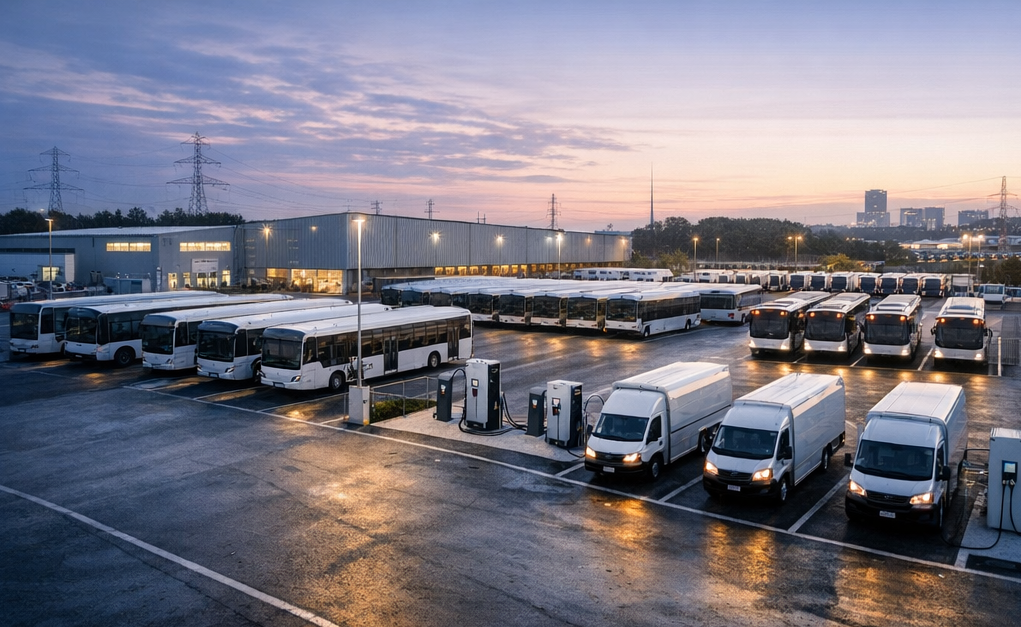
Electrification is no longer a future goal. Across transport, logistics, and municipal services, electric vehicles are already part of daily operations. What used to be pilot projects is now becoming standard practice.
But scaling an electric vehicle fleet introduces a different kind of challenge. The question is no longer whether vehicles are available. It is whether depot infrastructure can support them reliably, at scale, and without driving up costs.
This is where many fleet operators run into problems. As fleets grow, the depot becomes the operational backbone of the entire system. Charging windows are limited, grid capacity is constrained, and vehicles must be ready on schedule. If the depot cannot handle that complexity, the entire electric fleet management strategy starts to break down.
Large-scale fleet electrification is not just about replacing diesel with electric. It is about coordinating energy, infrastructure, and operations in a way that works under real conditions.
In practice, vehicles rarely behave in neat, predictable patterns. They often return to the depot at the same time, creating peaks in demand. Charging times vary depending on routes and usage, while local electricity infrastructure limits how much power is available at any moment.
Without proper planning, these constraints quickly turn into bottlenecks. Energy demand spikes, energy costs increase, and vehicles may not be ready when needed. This is why the electrification of fleets often succeeds or fails at the depot level.
A well-designed depot creates stability. A poorly designed one introduces constant operational pressure.

Effective fleet electrification solutions start with a clear understanding of how fleets actually operate.
This means looking closely at vehicle fleets, including different vehicle types, their vehicle range, and how their EV batteries are used throughout the day. Arrival patterns, dwell times, and route variability all influence how energy must be delivered.
Rather than relying on averages, leading fleet electrification companies model real scenarios. They test peak demand, unexpected delays, and seasonal changes. This kind of planning reveals where infrastructure may struggle long before vehicles are deployed.
At the same time, grid capacity must be treated as a hard constraint. In many cases, the available connection defines the limits of an electric fleet, not the number of EV chargers installed. This is where electric vehicle load management becomes essential. It allows operators to work within existing limits instead of immediately investing in costly upgrades.
A phased approach often works best. It reduces upfront cost, improves cost effectiveness, and allows teams to refine their strategy as the fleet grows.
One of the most common mistakes in fleet depot charging is assuming that more chargers automatically solve the problem. In reality, unmanaged charging creates new issues.
This is why EV load management plays such a central role in modern depots. Instead of charging everything at once, operators can control when and how vehicles charge. This reduces peak demand and makes better use of available power.
It also changes how infrastructure is designed. Rather than relying only on high-speed chargers, many depots use a mix. Slower chargers handle overnight charging, while faster units provide flexibility when schedules shift. This balance improves efficiency and avoids unnecessary strain on the grid.
In this context, electric fleet management becomes less about reacting in real time and more about planning ahead with accurate data.

As fleets expand, infrastructure must evolve with them. The best fleet electrification services focus on flexibility from the start.
Scalable depot design is not just about adding more ev charging stations. It is about ensuring that power distribution, layout, and control systems can grow without disrupting operations. A rigid design may work for a small deployment but becomes a limitation as the number of electric vehicles EVs increases.
This is why simulation and planning tools are becoming standard. They allow operators to test different layouts, charging strategies, and energy scenarios before making physical changes. Instead of reacting to problems later, teams can design depots that are ready for future demand.
Energy is often treated as an operational challenge, but for large fleets, it is primarily a planning issue.
Understanding future demand is key to defining the best energy management for electric fleet operations. By analyzing expected usage, peak demand, and charger utilization, operators can determine whether their infrastructure is sufficient.
This approach also opens the door to integrating renewable energy. On-site generation can reduce reliance on fossil fuelsand lower long-term fueling costs. While it does not replace grid capacity, it adds resilience and supports the broader benefits of fleet electrification.

Even the best strategy needs to work in practice. That is why successful projects rely on close collaboration between fleet managers, utilities, and technology providers.
Pilot projects play an important role here. Testing systems on a smaller scale allows teams to validate assumptions and refine their approach before scaling up. It also helps teams adapt to new workflows, since electric operations differ from traditional ones in terms of maintenance, scheduling, and energy use.
The shift to electric vehicles brings clear advantages, from lower emissions to reduced moving parts and maintenance needs. But these benefits only materialize when depots are designed to handle real operational complexity.
Strong fleet electrification solutions focus on smart charging, scalable infrastructure, and careful energy planning. They treat the depot as a system, not just a location.
As the transition accelerates, the depots that succeed will be those designed with growth in mind—capable of supporting not just today’s fleet, but the next phase of electric fleet expansion.
This is not intended as financial or technical advice and ChargeSim accepts no liability for actions taken based on it. Always consult a professional about your specific situation.